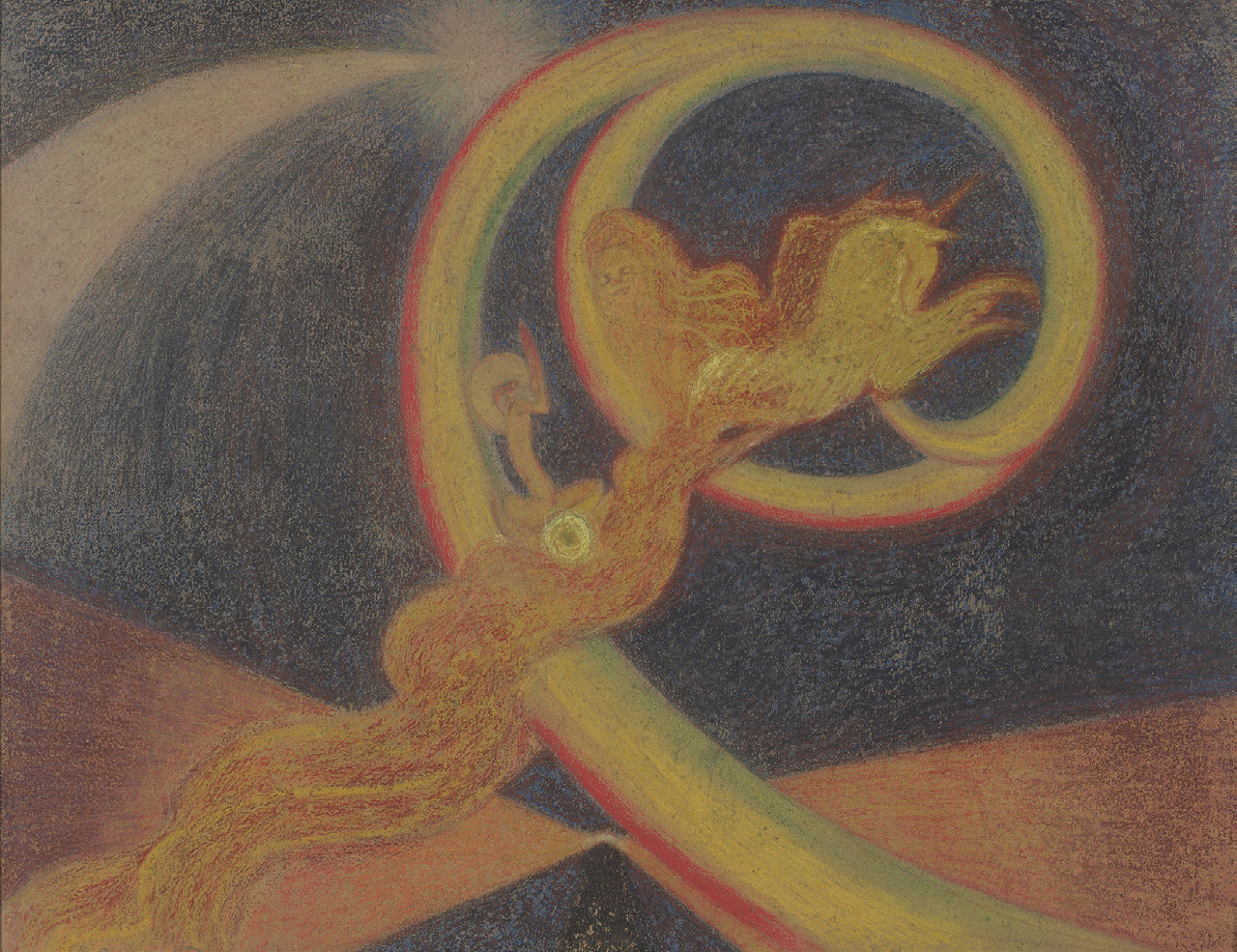
**Léon Spilliaert**
*Vision. Élie sur le char de feu*
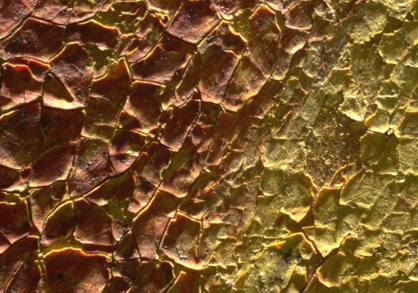
MRBAB, inv. 10226 Artiste de formation autodidacte, Léon Spilliaert est réputé pour sa **démarche expérimentale** et ses fréquentes combinaisons et **superpositions** de matériaux variés dans une seule et même œuvre. Son choix de l'encre, de l'aquarelle, du pastel et des crayons de couleur ne relève pas seulement d'une décision esthétique ; le dialogue entre ces matières influe également de manière importante sur la texture de ses créations. De cela résultent des effets visuels singuliers, mais aussi des défis en matière de conservation et d'exposition. Afin d'analyser la structure matérielle complexe de ces œuvres, nous pouvons les examiner en **lumière rasante**. Cette technique, où une source de lumière est dirigée sur la surface selon un angle proche de l'horizontale, accentue les moindres aspérités et dévoile une multitude d'informations qui demeurent généralement invisibles sous un éclairage normal. Suivant l'orientation de la lumière, différents détails apparaissent, nous permettant de dresser la topographie de l'œuvre. Sur cette œuvre, par exemple, la lumière rasante fait apparaître des craquelures et « soulèvements » distincts dans les passages rouges et jaunes. Les ombres qui en résultent montrent que beaucoup de ces **écailles** ont les bords décollés, témoignant de l'instabilité extrême de la couche picturale à ces endroits. Sa fragilité empêche pour l'heure la présentation de cette œuvre au public.
Léon Spilliaert
Vision. Élie sur le char de feu, pastel, détrempe et crayon sur carton (détail : écailles aux bords relevés)
MRBAB, inv. 10226
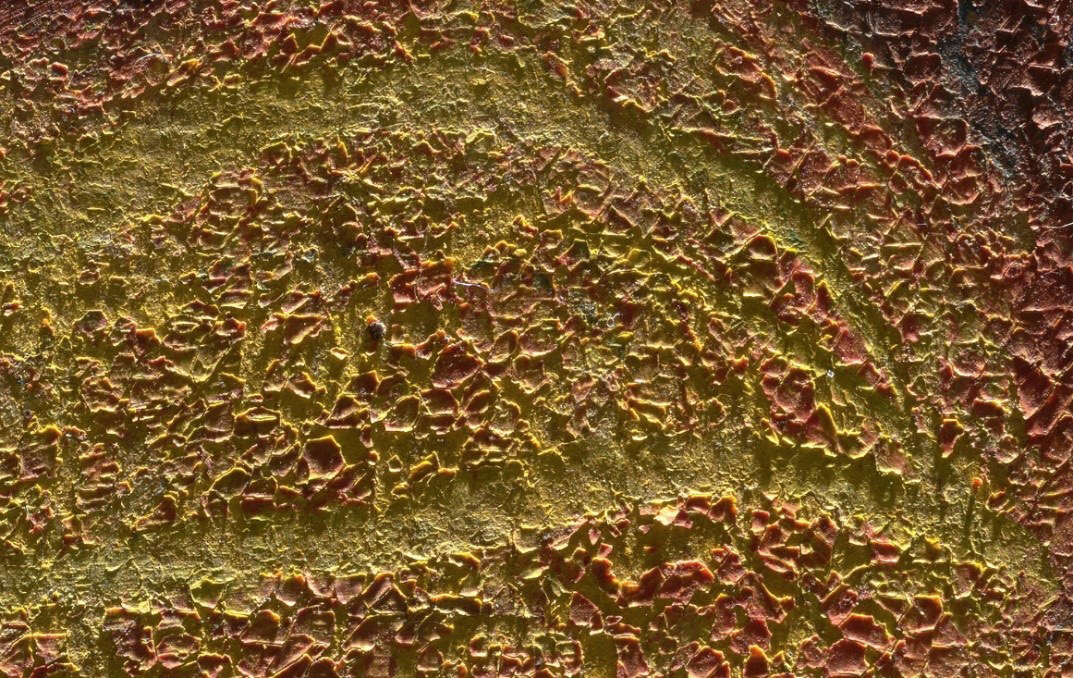
La photographie en lumière rasante révèle également les interventions de l'artiste. On peut observer comment Spilliaert, dans sa quête de la composition juste, a incisé des lignes dans une couche de peinture rougeâtre encore fraîche pour révéler par contraste la couleur jaune sous-jacente et ainsi modeler la figure. Cette technique atteste de sa méthode de travail délibérée et parfois singulière. Enfin, l'éclairage rasant aide à l'identification des différents matériaux. On peut alors différencier les couches plus fines, comme le crayon ou un pastel appliqué d'un geste léger, et des matières plus épaisses et pâteuses tels que les crayons gras (à l'huile ou à la cire) et la détrempe. Les superpositions complexes de techniques dans l'œuvre de Spilliaert sont ainsi mises en évidence.
Léon Spilliaert
Vision. Élie sur le char de feu, pastel, détrempe et crayon sur carton (détail : médias grattés)
MRBAB, inv. 10226
*Crédits photos : © MRBAB, Bruxelles / photo : J. Geleyns - Art Photography | © KU Leuven/Marie-Noëlle Grison; stitching and dynamic visualisation: Robert G. Erdmann (University of Amsterdam)*
*Vision. Élie sur le char de feu*
MRBAB, inv. 10226 Artiste de formation autodidacte, Léon Spilliaert est réputé pour sa **démarche expérimentale** et ses fréquentes combinaisons et **superpositions** de matériaux variés dans une seule et même œuvre. Son choix de l'encre, de l'aquarelle, du pastel et des crayons de couleur ne relève pas seulement d'une décision esthétique ; le dialogue entre ces matières influe également de manière importante sur la texture de ses créations. De cela résultent des effets visuels singuliers, mais aussi des défis en matière de conservation et d'exposition. Afin d'analyser la structure matérielle complexe de ces œuvres, nous pouvons les examiner en **lumière rasante**. Cette technique, où une source de lumière est dirigée sur la surface selon un angle proche de l'horizontale, accentue les moindres aspérités et dévoile une multitude d'informations qui demeurent généralement invisibles sous un éclairage normal. Suivant l'orientation de la lumière, différents détails apparaissent, nous permettant de dresser la topographie de l'œuvre. Sur cette œuvre, par exemple, la lumière rasante fait apparaître des craquelures et « soulèvements » distincts dans les passages rouges et jaunes. Les ombres qui en résultent montrent que beaucoup de ces **écailles** ont les bords décollés, témoignant de l'instabilité extrême de la couche picturale à ces endroits. Sa fragilité empêche pour l'heure la présentation de cette œuvre au public.
Vision. Élie sur le char de feu, pastel, détrempe et crayon sur carton (détail : écailles aux bords relevés)
MRBAB, inv. 10226
Vision. Élie sur le char de feu, pastel, détrempe et crayon sur carton (détail : médias grattés)
MRBAB, inv. 10226
Design et développement web Marie-Noëlle Grison & Robert G. Erdmann